

Sore feet at the end of the day are common, but they are not something you simply have to accept. The right shoe can take real load off the parts of your foot that hurt. Here is how a Vionic shoe does that.

Are Vionic shoes good for foot pain? For most everyday foot pain, yes. Vionic shoes are built to support the foot and take load off the tissues that hurt, which is exactly what health guidance recommends for common causes of foot pain such as plantar fasciitis, arch pain and general soreness from long days on your feet.1
A shoe will not cure a foot problem on its own. It is one of the most useful day-to-day tools for managing one, though, because good arch support and cushioning change how force travels through your foot with every step. That quiet load-sharing is what a Vionic shoe is built to do, every step, without you thinking about it.
The short version
Here is the honest answer, in four lines.
- Most everyday foot pain traces back to load and support. Heel pain, arch pain and tired feet often come from too little support and too much strain.
- Support and cushioning are what help. Firm arch support with a cushioned, stable heel reduces the strain that triggers the pain.
- Every Vionic shoe is built on Vio Motion technology. Our patented, podiatrist-designed footbed pairs stability, arch support, cushioning and flexibility.
- The support is clinically recognised. Many Vionic styles carry the APMA Seal of Acceptance, and we cite a peer-reviewed study on our contoured sandals for heel pain.
Are Vionic shoes good for foot pain?
Vionic shoes are a good choice for managing most common, everyday foot pain, because support is engineered into the shoe rather than added afterwards. Health guidance for conditions like plantar fasciitis points consistently to supportive, well-cushioned footwear as part of managing the pain, alongside stretching, load management and advice from a health professional.12 You get that support the moment you put the shoe on, with no extra insert to buy.
The honest limits matter too. Footwear manages foot pain, it does not cure the underlying cause, and pain that is severe or that lingers for more than a few weeks is worth having looked at by a podiatrist or your GP.1 Read the rest of this article as "how the right shoe helps", not "a shoe fixes everything".
The common causes of everyday foot pain
Most everyday foot pain is an overload story. A tissue or joint takes more strain than it can comfortably handle, day after day, and starts to complain. The usual culprits are worth knowing, because the same design features help across all of them.
Heel pain is most often plantar fasciitis, an irritation of the band of tissue running along the sole of your foot from heel to toes. It is the most common cause of heel pain, and the classic sign is a sharp pain with your first steps in the morning.1 Arch pain and tired, aching feet often come from a foot that rolls inward too far as you walk, a movement known as over-pronation, which lets the arch collapse and keeps pulling on tissue that is already working hard. Ball-of-foot soreness tends to follow long hours standing on hard floors in flat, unsupportive shoes. Age, higher body weight, time on your feet at work and your individual foot mechanics all raise the risk.2
Notice the thread through all of them. Flat, unsupportive shoes let the foot collapse and load the wrong tissues, while a shoe that supports the arch, cushions the heel and holds the foot stable spreads that load out. Spread the load and the sore tissue gets a break. Concentrate it and the pain keeps coming back.
What makes a Vionic shoe help
Every Vionic shoe is built on Vio Motion technology, a patented, podiatrist-designed biomechanical system rather than a soft insole you simply stand on. The footbed is contoured to a defined geometry that supports the medial arch and holds the heel in a neutral position, which limits the over-pronation that overloads sore tissue. We develop it in our own Vionic Innovation Lab, Violab, drawing on specialists in lower-limb biomechanics.3
As podiatrist Dr Sailee Tulpule describes it, Vio Motion "takes into consideration foot motion and biomechanics to create a more stable, cushioned shoe".3 A sore foot responds to that pairing of stability and cushioning, not to soft padding on its own. Soft padding masks a sore spot. Support changes the mechanics that made it sore.
Vio Motion™ Technology

Stability
A firm heel and footbed limit the over-pronation that overloads sore tissue.
Arch Support
A built-in contoured arch carries load your foot would otherwise take alone.
Cushioning
A cushioned heel softens impact through the most painful part of your foot.

Flexibility
The shoe still bends where your foot bends, so support never turns into stiffness.

Many of our styles also carry the APMA Seal of Acceptance from the American Podiatric Medical Association, awarded to products reviewed as supporting good foot health.4 For anyone managing foot pain, that is a useful shortcut: the support is engineered into the shoe, not something you add with a separate insert.
Vionic styles by type of foot pain
The right style depends on your day and where it hurts, so here is a starting point across closed shoes and warm-weather options, all built on the same Vio Motion footbed. For the full supportive range, browse the Vionic supportive collection.
For heel pain and long days on your feet
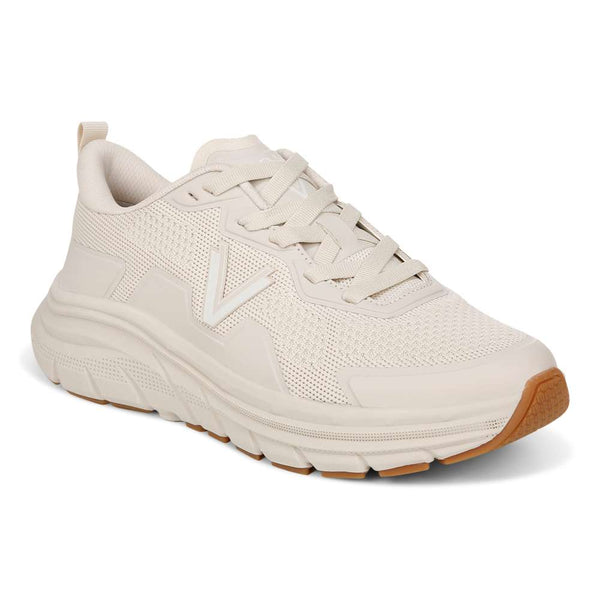
Walk Max Lace-Up Sneaker
A cushioned, supportive walking sneaker built for long days and longer distances.
Shop now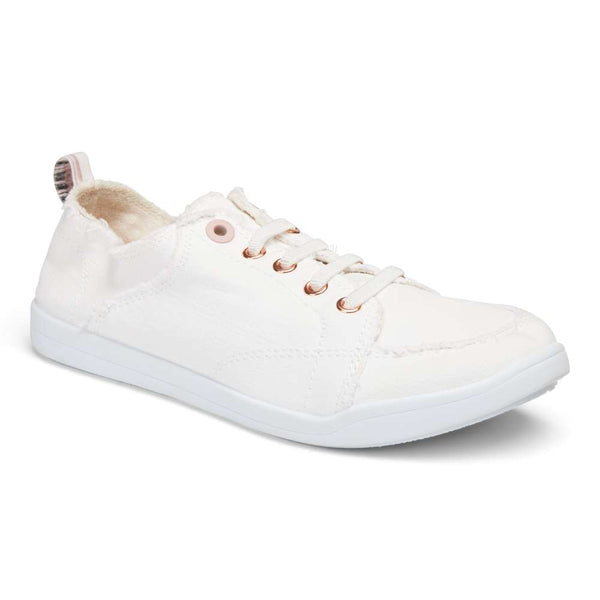
Pismo Casual Sneaker
An everyday sneaker that pairs the Vio Motion footbed with a wear-anywhere look.
Shop nowFor work, smart outfits and travel
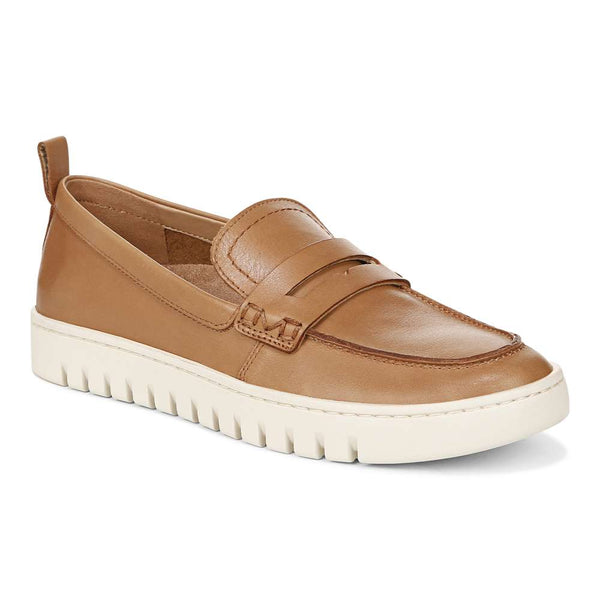
Uptown Loafer
Arch support hidden inside a polished leather loafer that also packs flat for travel. Travel + Leisure named it among its podiatrist-approved travel shoes.
Shop nowFor warm weather, without losing support
Foot pain does not take the summer off, and flat thongs are some of the worst offenders. Our orthotic sandals keep the contoured arch and stable heel in an open style. We cite a peer-reviewed clinical study, which we partially funded, reporting that our contoured sandals were comparable to our orthotic insoles for relieving moderate, non-traumatic heel pain.3
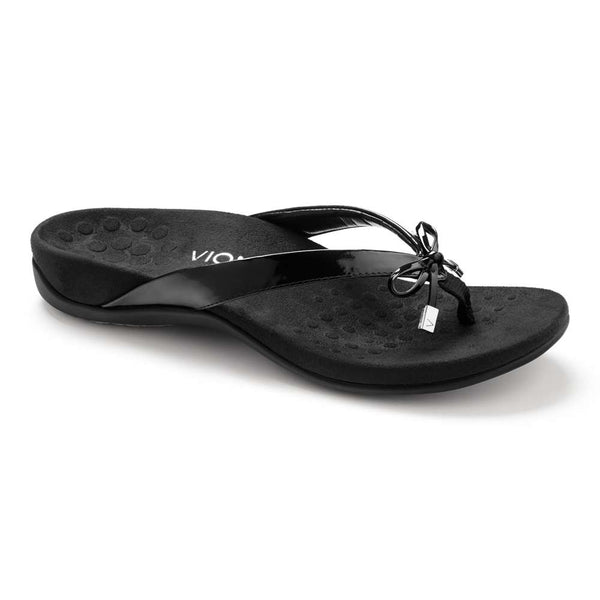
Bella Toe Post Sandal
Our signature supportive thong, with the arch built into the footbed.
Shop now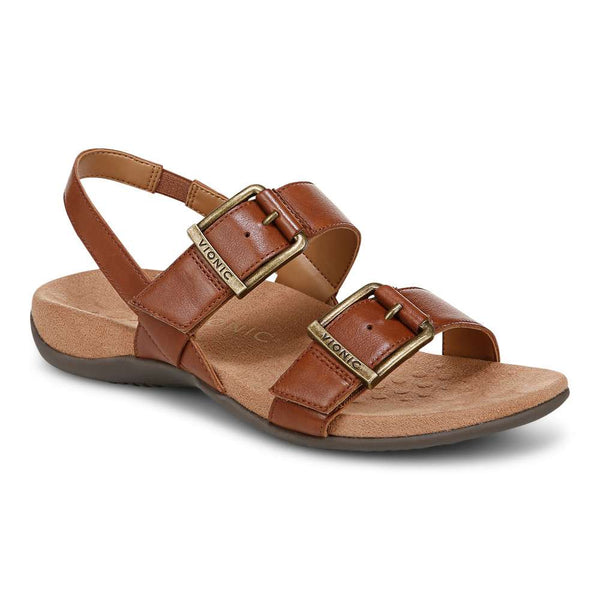
Reese Backstrap Sandal
A backstrap sandal that holds the heel in place while keeping things light and open.
Shop nowHow to choose, and when to see a podiatrist
When you try shoes on, look for a firm arch that supports your foot rather than collapsing under it, a cushioned heel, and a heel counter that holds steady when you press it. The shoe should still flex at the ball of the foot, not fold in half. If you wear prescribed orthotics, choose a style with a removable footbed so they fit.
Supportive footwear is one part of managing foot pain, not a replacement for medical care. If your pain is severe, is not improving after a few weeks, or is stopping you doing everyday things, see a podiatrist or your GP for advice tailored to your feet.1 You can read more on our plantar fasciitis and heel pain pages.
Shoes built to support every step
Browse the styles built on Vio Motion technology and find a pair for your feet.
Shop supportive shoesReferences
- Healthdirect Australia. Plantar fasciitis. healthdirect.gov.au
- American Academy of Orthopaedic Surgeons, OrthoInfo. Plantar Fasciitis and Bone Spurs. orthoinfo.aaos.org
- Vionic. Vio Motion Support (technology, Violab, Dr Sailee Tulpule quote and contoured-sandal heel-pain study, which Vionic states was peer-reviewed and partially Vionic-funded). vionicshoes.com.au
- Vionic. APMA Accepted. vionicshoes.com.au
1 comment
Really useful information on severe acute pain. Understanding the underlying cause is an important part of finding an appropriate approach to pain management. https://painrxaustralia.com